Herring Creek Hills: A Historic Farm’s Next Chapter
October 26, 2026There are still a few places in our region where time seems to have stood still. Along Upper Herring Lake’s eastern shore, the water is rimmed by rolling orchards and forested ridges. Nearby protected lands—Green Point Dunes, Fruithaven and Arcadia Dunes Nature Preserves, along with the historic Watervale Resort—give the landscape a natural, storybook quality that’s grown increasingly rare.
With the proposed Herring Creek Hills Nature Preserve, GTRLC has a chance to protect more than 100 acres of property critical to water quality, wildlife habitat and the scenic character that defines this corner of Benzie County.
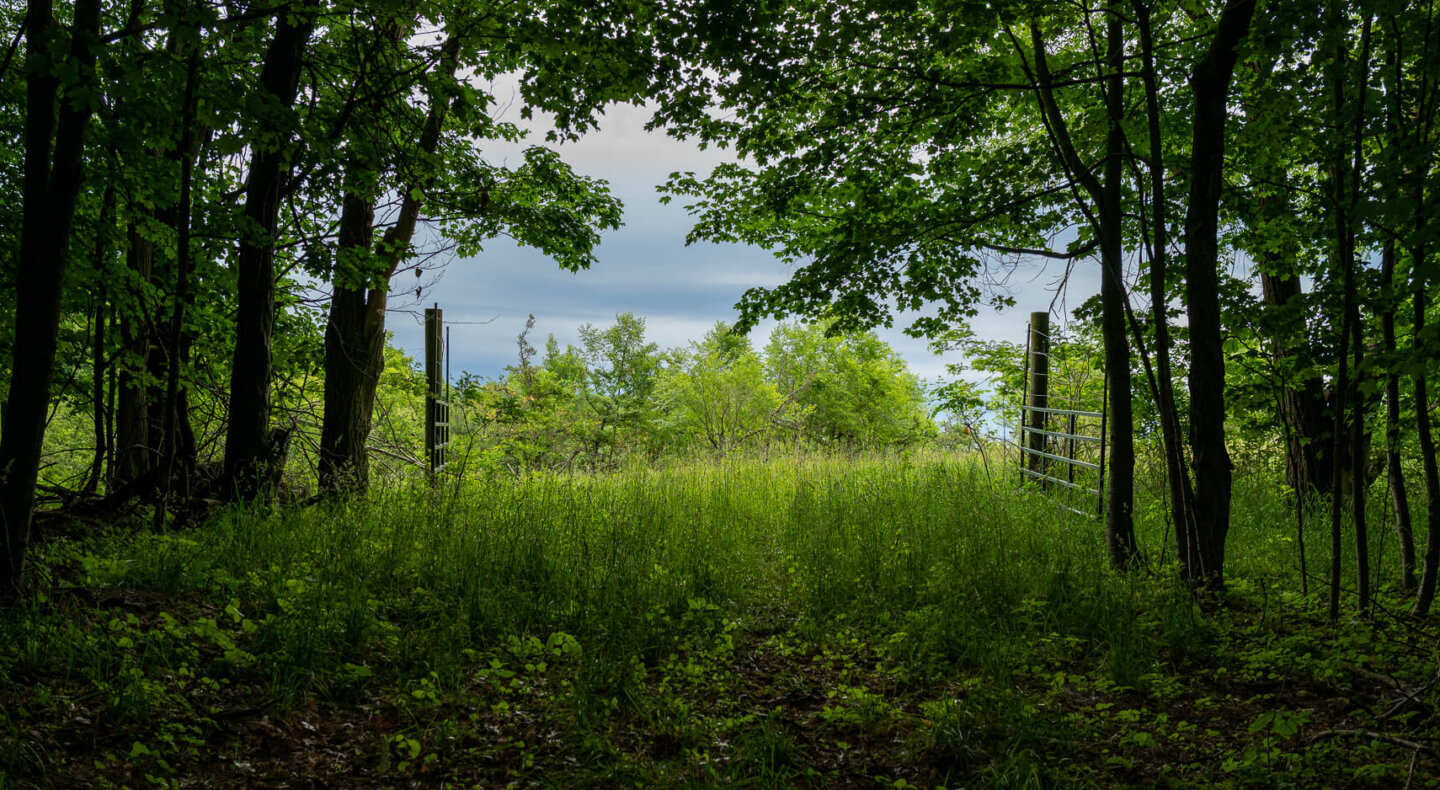
Blackbird Farm, the property’s inactive fruit orchard, sits high on a ridge overlooking Upper Herring Lake. The Smeltzer family has owned and worked the farm since World War II. “The land is wonderfully diverse: wetlands, high hills and all of the typical northern Michigan micro-environments,” said Don Smeltzer, who grew up on the property and lives in the original farmhouse. He explained that the land’s story dates to the glacial era.
“If you went back thousands of years, this [property] sat along the edge of Lake Algonquin,” he said, referring to the ancient glacial lake that once covered much of what is now the Great Lakes. “We discovered gravel eight to ten feet below the surface…washed into this valley as the glaciers melted.”
Rows of apple and cherry trees give way to northern mesic and boreal forests, including stands of exceptionally large oak and eastern hemlock. Some of the oldest trees predate the farm itself, according to Smeltzer, survivors of the lumbering era that swept through the region around the time the farmstead was established in the 1870s. “They are remnants from the lumbering days,” he said. “White pine was the premium wood back then, and hardwood wasn’t considered as valuable—it went into railroad ties. So the trees that weren’t cut back then are still standing.”
Angie Bouma, GTRLC’s senior conservation ecologist, was struck by the towering oaks lining the ridgetop, along with specialist plants like wood betony. “These are trees and plants you just don’t find much anymore,” she said. Early ecological assessments also turned up sensitive plants such as beechdrops and American brooklime, and a spring visit found jack-in-the-pulpit blooming amid a chorus of birds and amphibians. Bald Eagle, whitetail deer, American Redstart and Ovenbird provide a snapshot of the wildlife the land already supports.
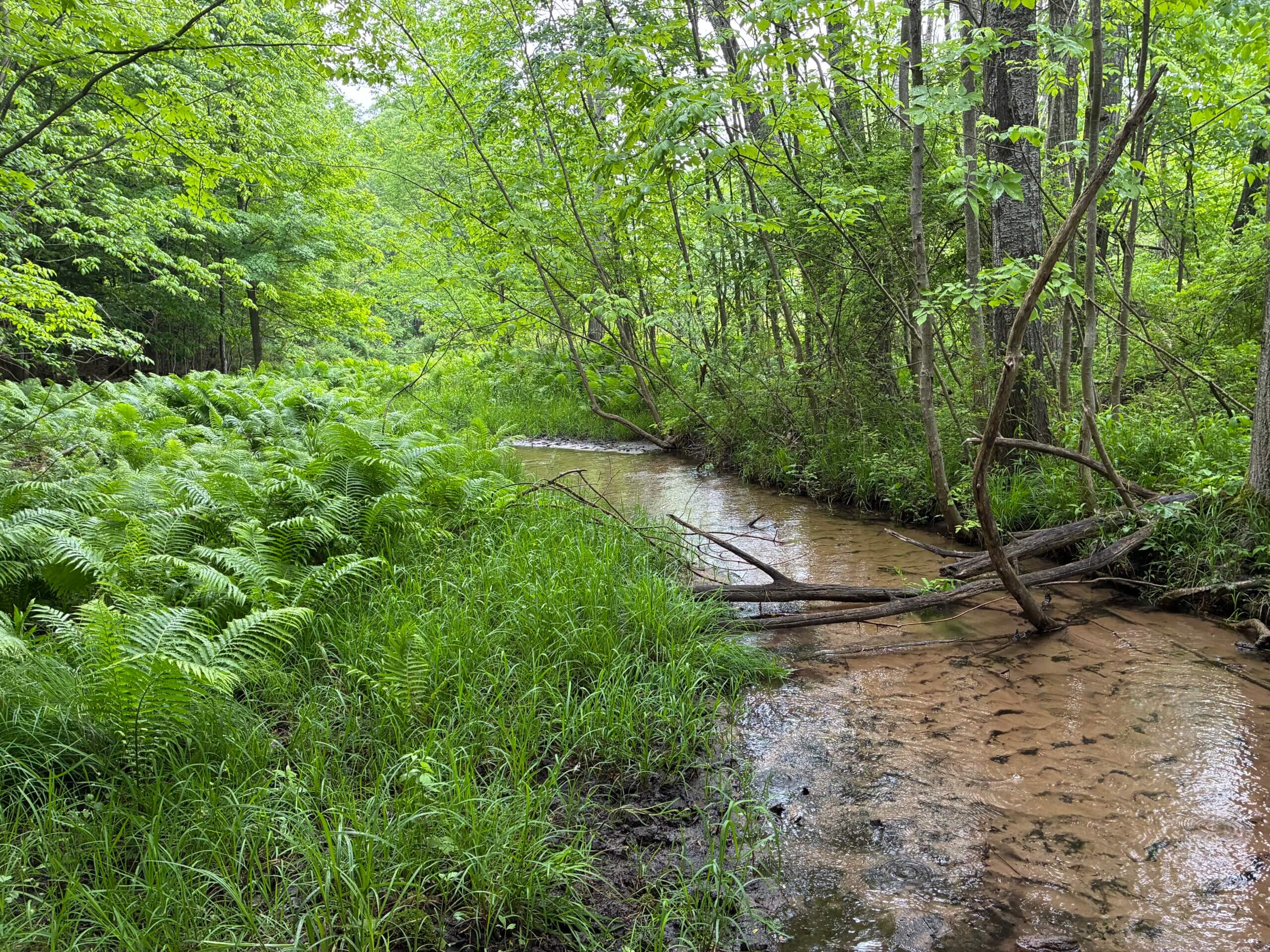
Of all the reasons to protect this land, safeguarding water quality is among the most consequential. The property includes significant Upper Herring Lake frontage and 3,500 feet along Herring Creek. Comprising the northern branch of Herring Lake Swamp, the land was identified as a priority conservation area in the Herring Lakes Watershed Protection Plan. Northern wet meadow, southern shrub-carr and rich conifer swamp wetlands serve as natural filters, gradually absorbing and purifying runoff before it reaches Herring Creek, which flows through both Upper and Lower Herring Lake, on its way to Lake Michigan.
“Its forested habitats and wetlands buffer the north branch of Herring Creek, which ultimately flows into Lake Michigan,” said Bouma. “The benefits reach far beyond this one property.”
Properties like this, with sweeping views, open fields and significant water frontage, rarely stay undeveloped for long once
they’ve changed hands—making this parcel a prime target for residential development that would fragment habitat, degrade water quality and permanently alter the area’s rural character.
After Don Smeltzer’s father passed away in 2004, he began exploring what the family might do with the farm, including a plan to grow grapes and open a winery. A design firm drew up plans that included a vineyard, a tasting room and roughly a dozen house sites with shared beach access. While that plan never moved forward, future appraisals made clear how much the waterfront lots would be worth on their own. Selling them off, though, would have left the rest of the farm’s future uncertain.
“I knew the Conservancy would take good care of the property,” Smeltzer said. He came to know the organization through his years as township supervisor, watching it protect land nearby, including the Upper Herring Lake Nature Preserve, which sits across from the farm on the west side
of the lake.
Wanting the farm to stay whole, Don and his sister Ann Henning, co-trustees of the Helen H. Smeltzer Trust, are now working with the Conservancy to preserve the land. The family is offering the property to GTRLC at a bargain sale, generously agreeing to part with it below market value to make its protection possible. Sharcy Ray, GTRLC’s land protection team assistant working on the project, said the risk of future development remains real without that protection. “I have no doubt that the ridgeline would be developed,” she said. “Maybe not right away, but as time passes, that would absolutely happen.”
Protecting the land also opens the door to a variety of restoration initiatives. Stewardship plans call for controlling invasive species such as autumn olive and garlic mustard, with a long-term goal of promoting forest connectivity and the growth of native plants to support pollinators and healthy ecosystems.
“This is a great place for the forest to heal itself and connect the disparate woodlots into a canopy that stretches across the current fields and orchards,” Bouma said. “It will take years of monitoring so it doesn’t become an autumn olive thicket, but there is a lot of opportunity here.”
Once protected, the land would be open to the public for the first time. Preliminary plans call for one to two miles of sustainably built trail through forest, including an overlook with scenic views of Upper Herring Lake and the surrounding landscape. “The view is pretty remarkable,” said Ray, “and there are fewer and fewer opportunities for people to enjoy places like this as northern Michigan’s landscapes become more developed.”
The sale terms are still being finalized, but current plans call for a portion of the property, including the farmhouse where Don grew up, to remain in the Smeltzer family. While Don feels sad about this chapter coming to an end, he hopes others will experience the land as he has. “I love walking in nature—it’s calming. You can sort your thoughts out,” he said. “It makes me realize that I’m just a tiny speck in the big scheme of things. All of my problems, whatever is bugging me, I come back not so worried. I hope future generations can walk this farm, see remnants of a previous life that existed, take a retreat from the cares of the world and figure out the important things in life—the things that last—then come back refreshed.”
“Knowing it will be preserved forever gives me a lot of satisfaction,” he added.
Visit GTRLC.ORG for more information. To support this project, contact Senior Charitable Giving Specialist Kate Pearson at kpearson@gtrlc.org or (231) 929.7911 ext. 305.
Categorised in: Stories of Support, Uncategorized